Search "Fort Lauderdale seawall requirements" and you will find the same number surface again and again: four feet now, five feet by 2050, with 2035 as the year everything is supposed to tighten up. It is a real number. It comes from Broward County's own resiliency code. It is also, for anyone shopping waterfront property inside Fort Lauderdale city limits specifically, three years out of date.
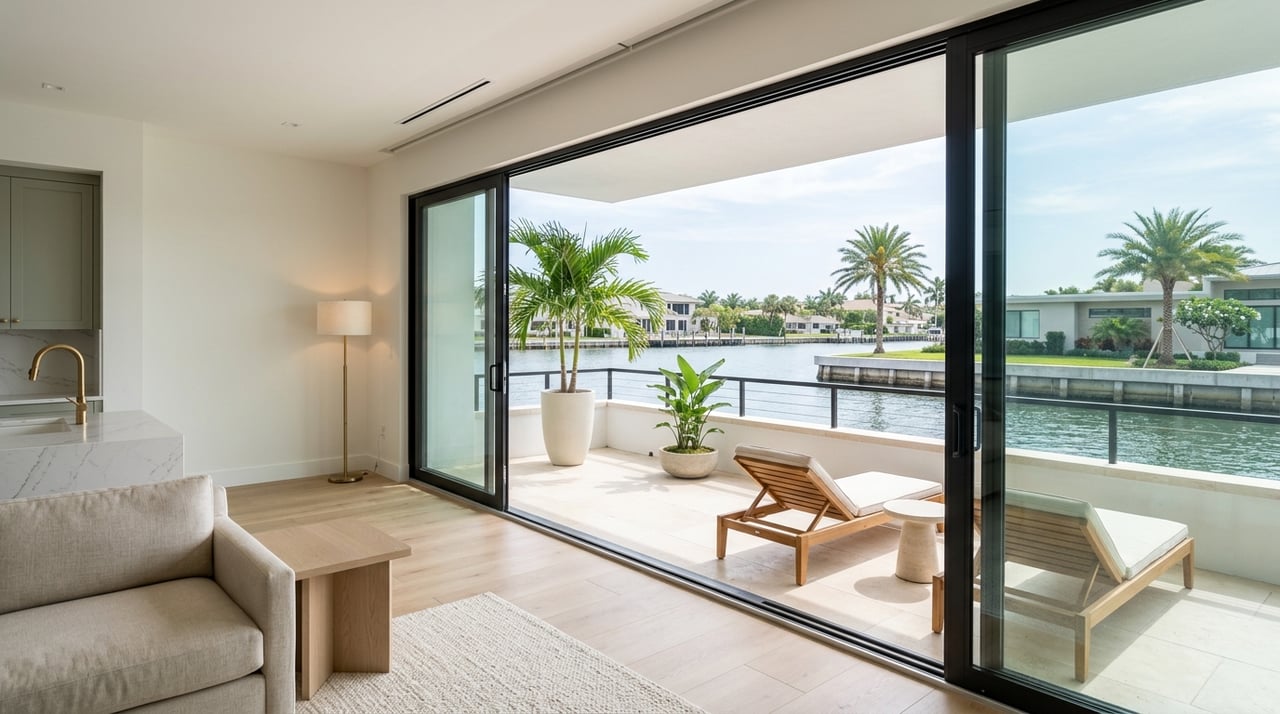
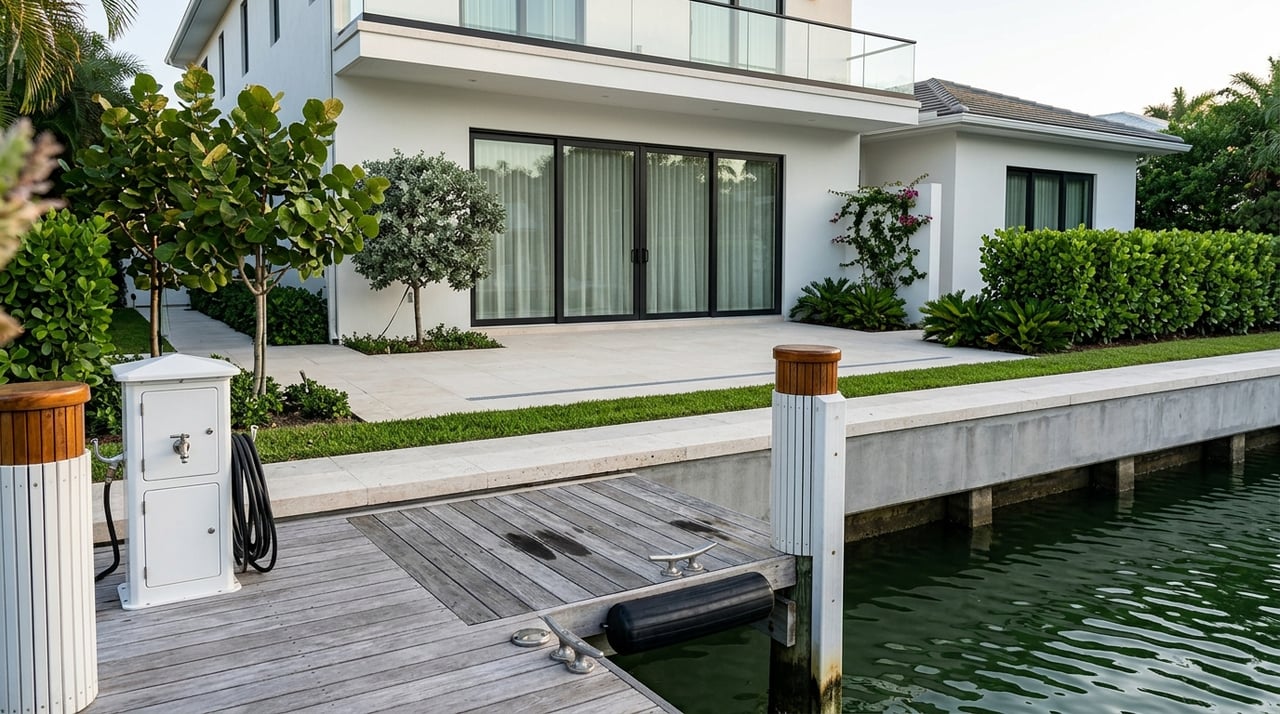
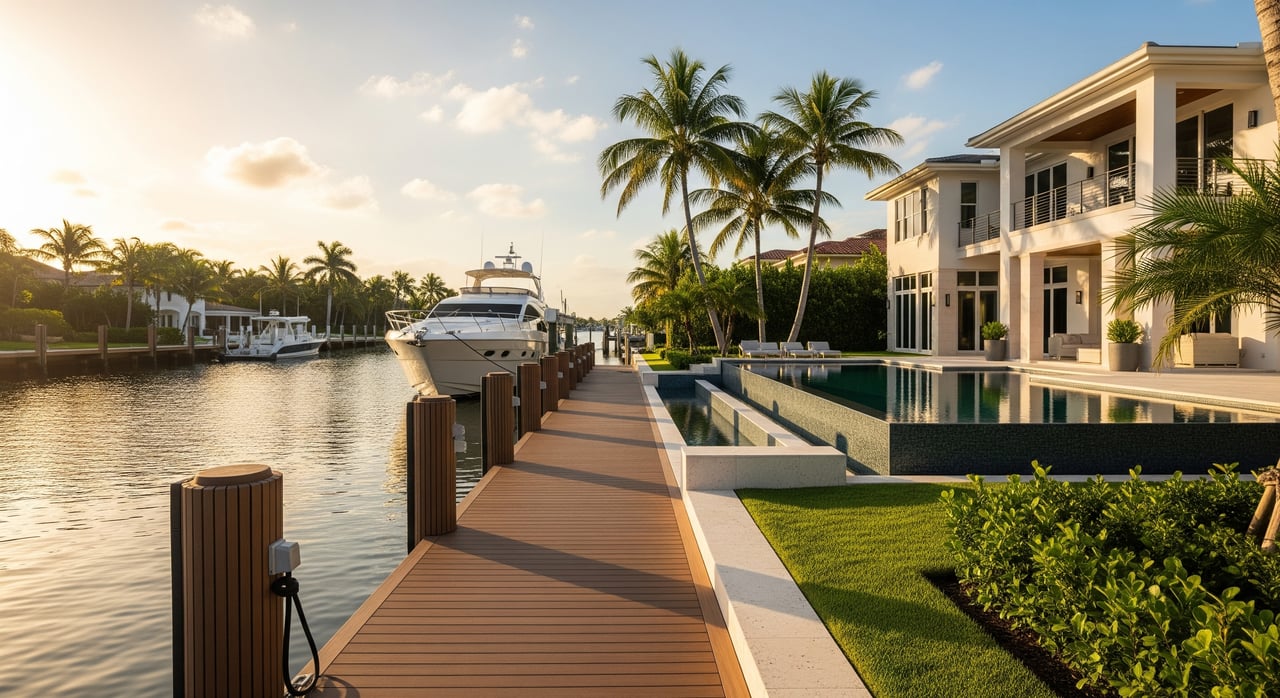
The city did not wait for the county's runway to expire. In March 2023, Fort Lauderdale adopted its own tidal barrier ordinance and moved straight to the stricter standard: a minimum top elevation of 5 feet NAVD88, up from the previous 3.9 feet. No four-foot interim step. No waiting until 2035. If you are evaluating a canal-front or Intracoastal home in Rio Vista, Sunrise Key, Coral Ridge, Harbor Beach, or any of the city's waterfront enclaves, the standard your seawall gets measured against today is already the 2050 number.
That gap between what buyers read online and what the city actually enforces is the kind of detail that surfaces at the worst possible moment: during appraisal, during a lender's document request, or in a repair negotiation three days before closing.
What the ordinance actually requires
The city's rule does not force every homeowner to rebuild tomorrow. It applies when one of three things happens: a property owner builds a new seawall, an existing wall falls into what the ordinance calls significant disrepair, or the city cites a property for letting tidal water breach onto a neighbor's land or a public right of way.
Broward County's underlying model ordinance, which Fort Lauderdale's rule is built on top of, defines that disrepair threshold with more precision than most buyers expect:
A wall is presumed to be in disrepair the moment tidal water passes through or over it onto a neighbor's land or a public street. There is no minimum crack size or age requirement in the code, just whether water is getting past it.
The county code also spells out what happens after a citation. The property owner has 60 days to show progress and up to 365 days to complete an approved fix. That clock does not care whether the home changed hands the week before.
Where the confusion comes from
The county's regional resilience standard was written as a floor, not a ceiling. It gave coastal municipalities room to phase in the five-foot standard gradually, permitting four-foot walls through January 1, 2035 as long as they are engineered to reach five feet by January 1, 2050. That flexibility is real, and it is still the operative rule in whichever Broward cities chose to use it.
Fort Lauderdale simply did not take the extension. City staff and the Marine Advisory Board pushed the stricter version through in 2023, ahead of the county's own deadline. A lot of the buyer guides circulating online were written against the county's baseline language and never updated once individual cities adopted their own versions. That is a reasonable mistake for a national portal to make. It is a costly one for a buyer to repeat during due diligence on a specific address.
| Broward County's model ordinance | Fort Lauderdale's actual rule | |
|---|---|---|
| Minimum elevation available now | 4 feet NAVD88 permitted through 2035 | 5 feet NAVD88, in effect since March 2023 |
| Full compliance deadline | January 1, 2050 | Already the standard for new walls and substantial repairs |
| Who it governs | Sets the floor for all tidally-influenced Broward municipalities | Fort Lauderdale opted out of the phase-in |
The dollars behind the ordinance are not theoretical
The city has been putting its own money where the ordinance is. A city update from August 2023 detailed several completed and in-progress public seawall projects: two new seawalls on Hendricks Isle, a $1.5 million investment finished in about seven months, a nearly $3 million project replacing 790 linear feet of seawall along SE 10th Street in Rio Vista and the south side of Las Olas Boulevard, and a $1 million, 130-linear-foot seawall coming to Merle Fogg Park on the Intracoastal.
Those are municipal projects protecting roadways and public land, so the cost per foot runs higher than what a homeowner replacing a private residential wall should expect. For private waterfront lots, industry pricing generally falls between $500 and $1,200 per linear foot for a full replacement, with total project costs commonly landing between $20,000 and $100,000 or more depending on lot width and wall condition. The point is not the exact figure on any one job. It is that the city treats this as active, funded infrastructure work, not a distant policy on paper.
Some neighborhoods have already felt this directly. Portions of Middle River and Isla Bahia have had documented seawall assessments in recent years, meaning homeowners were billed for repairs after the fact rather than budgeting for them in advance. That history is public record, and it is worth asking your agent to pull it for any specific street before you fall in love with a dock and a sunset view.
What this means for a comp-based offer
Here is the part that should change how you read a listing. If a home last sold in 2019 or 2020, that price was set before the current 5-foot standard existed. A seawall that was perfectly acceptable at the time of that sale may now sit below the elevation the city requires the moment it needs repair. Appraisers weighing today's offer against that older comp are working with numbers that predate a capital obligation the current owner may be facing.
That cuts both ways. A seller who has already replaced or raised a wall to the current standard is holding a real, documentable asset that older comps in the same canal will not reflect. A buyer comparing two similar-looking waterfront homes on paper needs the seawall's actual elevation, not just its age or appearance, to know which one is priced correctly.
What to ask before you write an offer
Standard home inspections in Florida do not typically include a full seawall evaluation. That leaves it entirely to the buyer to arrange. A few things worth doing before you go under contract on anything in Fort Lauderdale's waterfront neighborhoods:
Get a marine contractor or coastal engineer to survey the wall's current top elevation against NAVD88, not just a visual walk-through for cracks. Ask whether the property has ever been cited for tidal trespass, since that citation starts the 60-day and 365-day clock regardless of ownership changes. Request the HOA or municipal assessment history for the street, particularly if you are looking in an area with a known pattern like Middle River or Isla Bahia. And if you are financing, ask your lender up front what documentation they will require, since elevation certificates and inspection reports can add time to underwriting on an older seawall.
Sellers face a mirror version of the same homework. Bringing a current elevation survey, a marine engineer's condition report, and any permits already on file to the listing table turns a potential negotiation flashpoint into a documented, priced-in fact. Buyers tend to respond better to a clear number than to a vague assurance.
Frequently Asked Questions
Does every waterfront home in Fort Lauderdale need a 5-foot seawall right now? No. The requirement applies when a wall is newly built, substantially repaired after damage to more than half its structure, or cited for letting tidal water cross onto a neighbor's property or a right of way. A wall that predates the ordinance and has not triggered one of those conditions can remain as is until it does.
Is the rule the same everywhere in Broward County? Not necessarily. The county set a floor that allows municipalities to phase in the standard through 2035. Fort Lauderdale chose to adopt the full 5-foot requirement immediately in 2023. A property just across a city line in unincorporated Broward or a neighboring municipality may still be operating under a different timeline, so it is worth confirming the specific city's ordinance rather than assuming a countywide rule applies uniformly.
Who pays for seawall repairs when they come up during a sale? That is a matter of negotiation between the parties, informed by whatever the inspection and engineering report find. Buyers can ask for repairs, a credit, or a price adjustment based on documented condition. What is not negotiable is the citation clock. Once tidal trespass is cited, the 60-day and 365-day deadlines apply to whoever owns the property when they come due.
A seawall is not the most photogenic part of a waterfront listing, but it is often the line item that determines whether a deal closes cleanly or stalls in the eleventh hour. Buyers and sellers who understand exactly where Fort Lauderdale's standard sits today, not where a five-year-old blog post says it will eventually land, are the ones negotiating from real information instead of catching up to it mid-contract.
If you are evaluating a specific address and want a clear read on where its seawall stands relative to the city's current standard, Ginger LuxeReal can help you build the right due diligence team before you write an offer. Schedule a Private Consultation to talk through the property, the timeline, and what it will actually take to close with confidence.