Salt air, sleek towers, private docks, and miles of blue water. If you are choosing a waterfront home in Miami, the options are exciting and very different. You want the right mix of views, boating access, privacy, and long-term value. This guide gives you a clear, practical tour of Miami’s top waterfront settings, the neighborhoods to know, and the key checks to make before you buy. Let’s dive in.
Choose your waterfront type
Oceanfront living
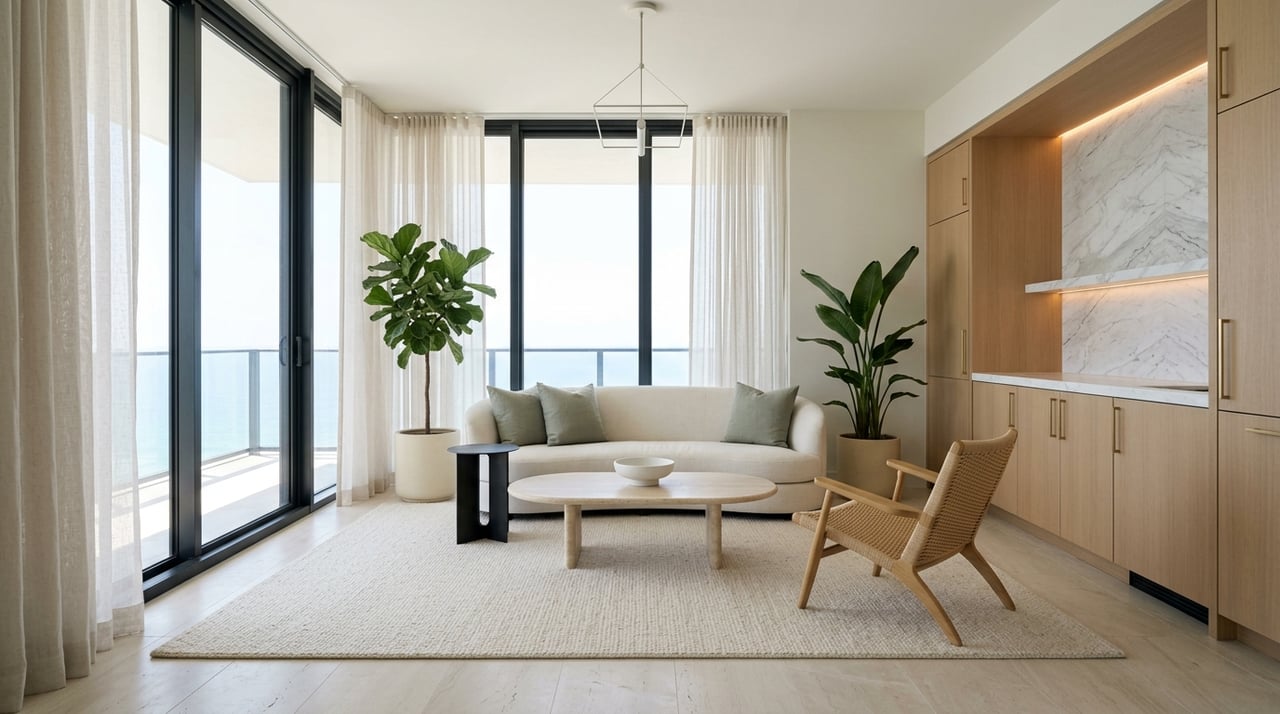
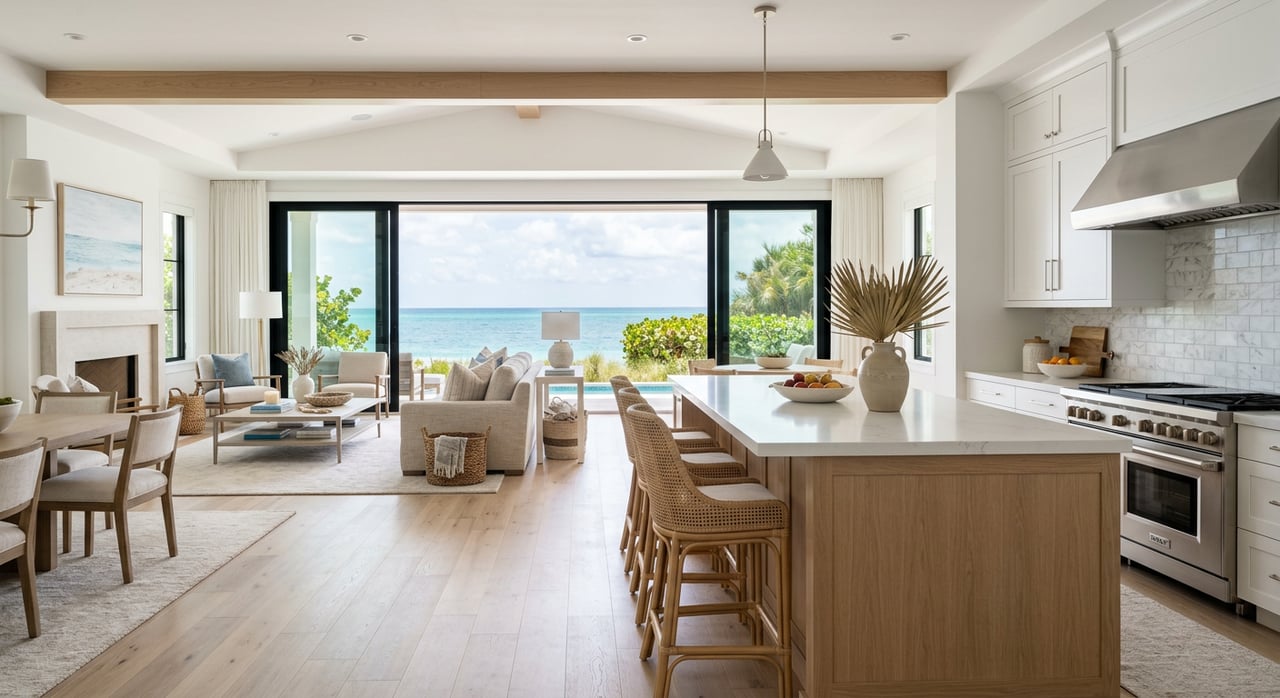
Oceanfront puts you right on the Atlantic beaches. You get direct sand access, open ocean views, and a true resort feel. You also face higher wind and wave exposure, which can affect maintenance and insurance.
Typical homes are beachfront high-rise condos in places like Miami Beach and Sunny Isles, and rare single-family estates in select pockets. If you love the beach lifestyle and sunrise views, oceanfront fits.
Bayfront and Intracoastal
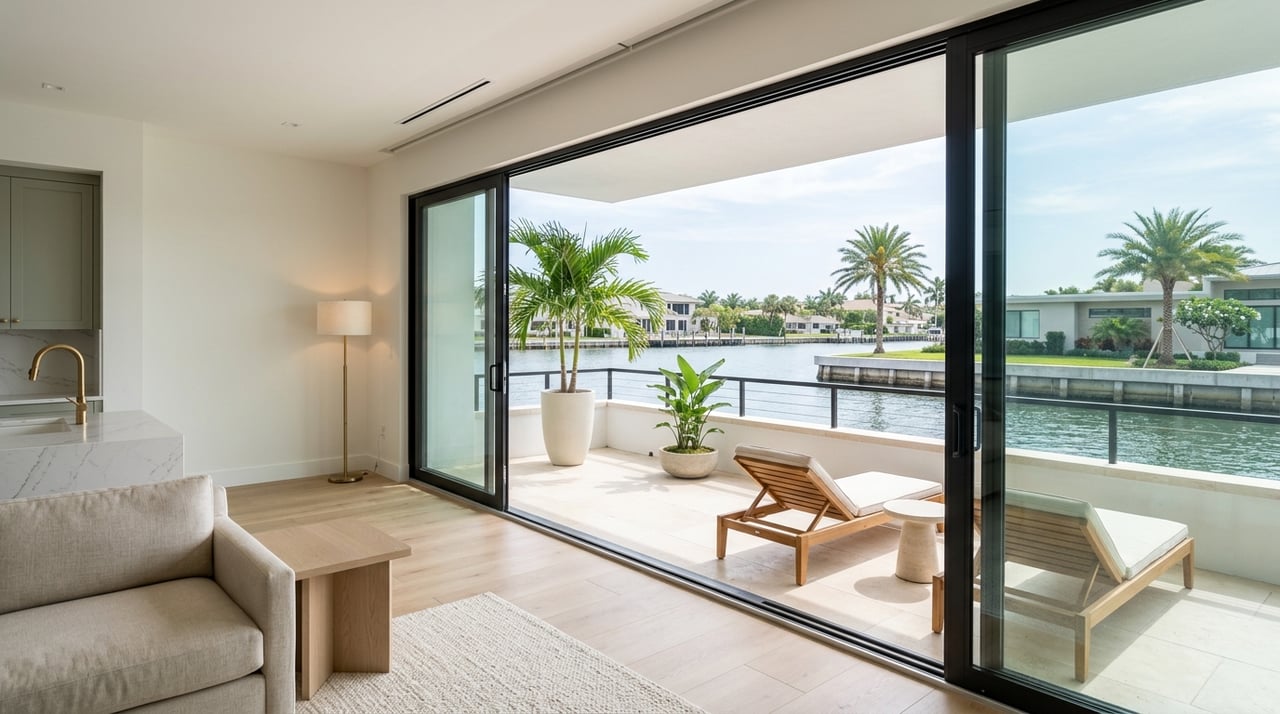
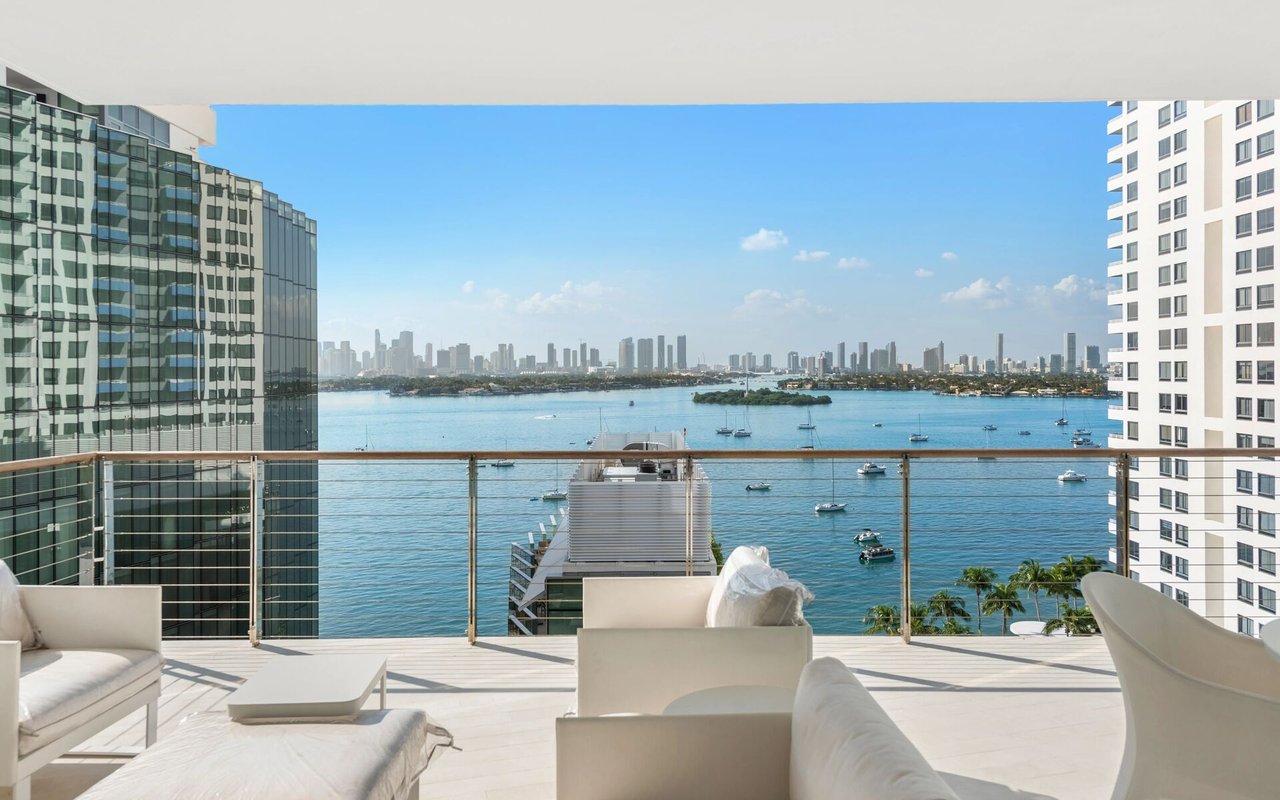
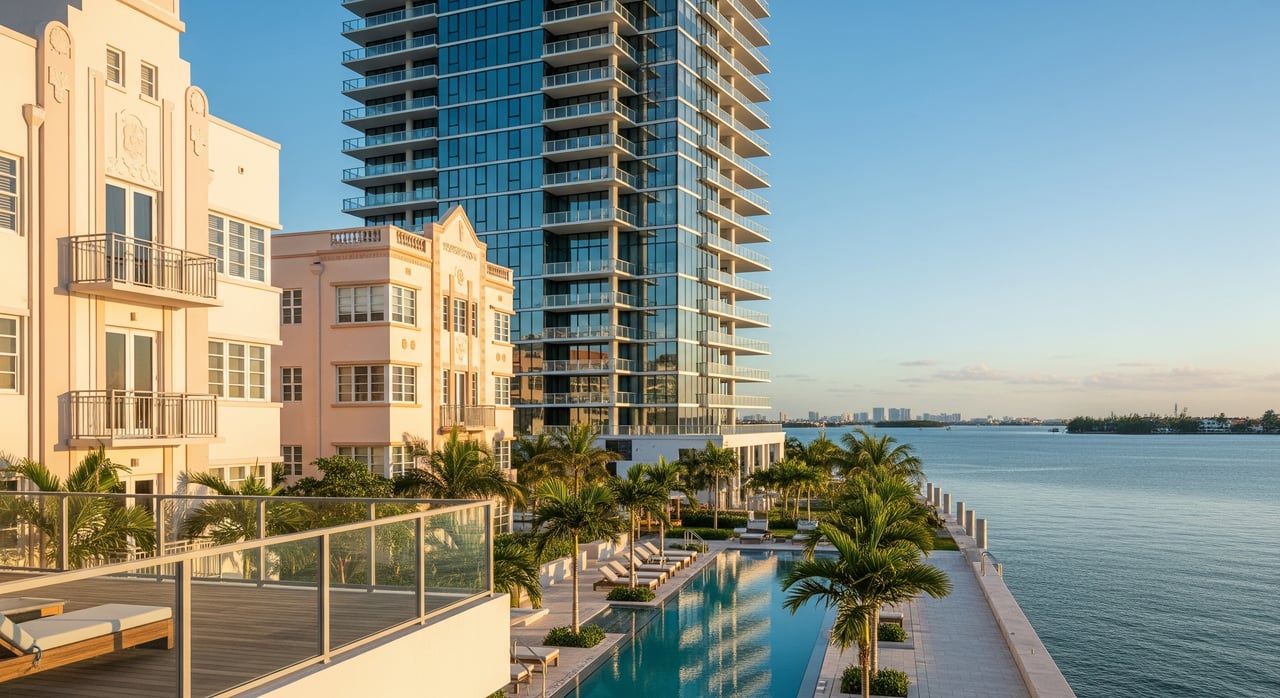
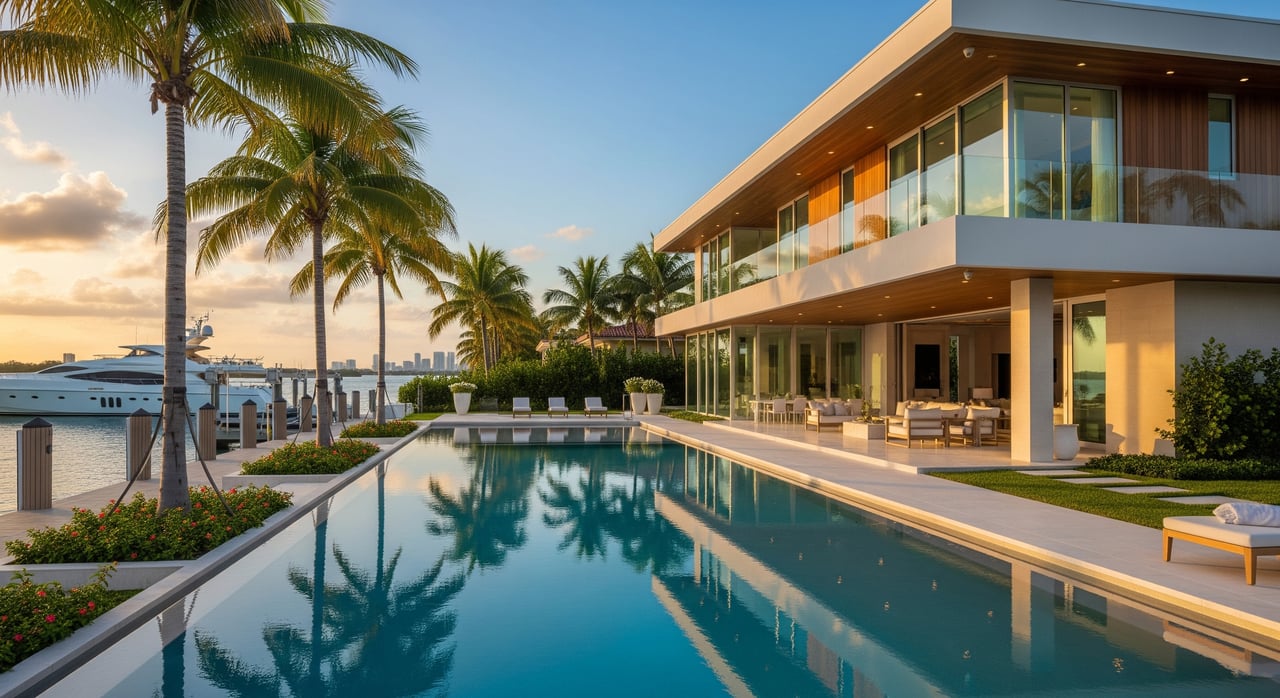
Bayfront living lines Biscayne Bay and the Intracoastal. Water is calmer than the ocean, and many properties have private docks with access to deeper channels in some areas. Views often include water and skyline.
This is a great match for small to medium boats and water sports. You trade waves for protected water and easy cruising.
Island living
Barrier islands blend beach and bay access. Some islands feel like private enclaves, while others are full-service towns. You will cross bridges or, in rare cases, use a ferry to come and go.
Island life can bring high privacy and a strong sense of community. It also means limited supply and premium pricing in many pockets.
Canal and riverfront
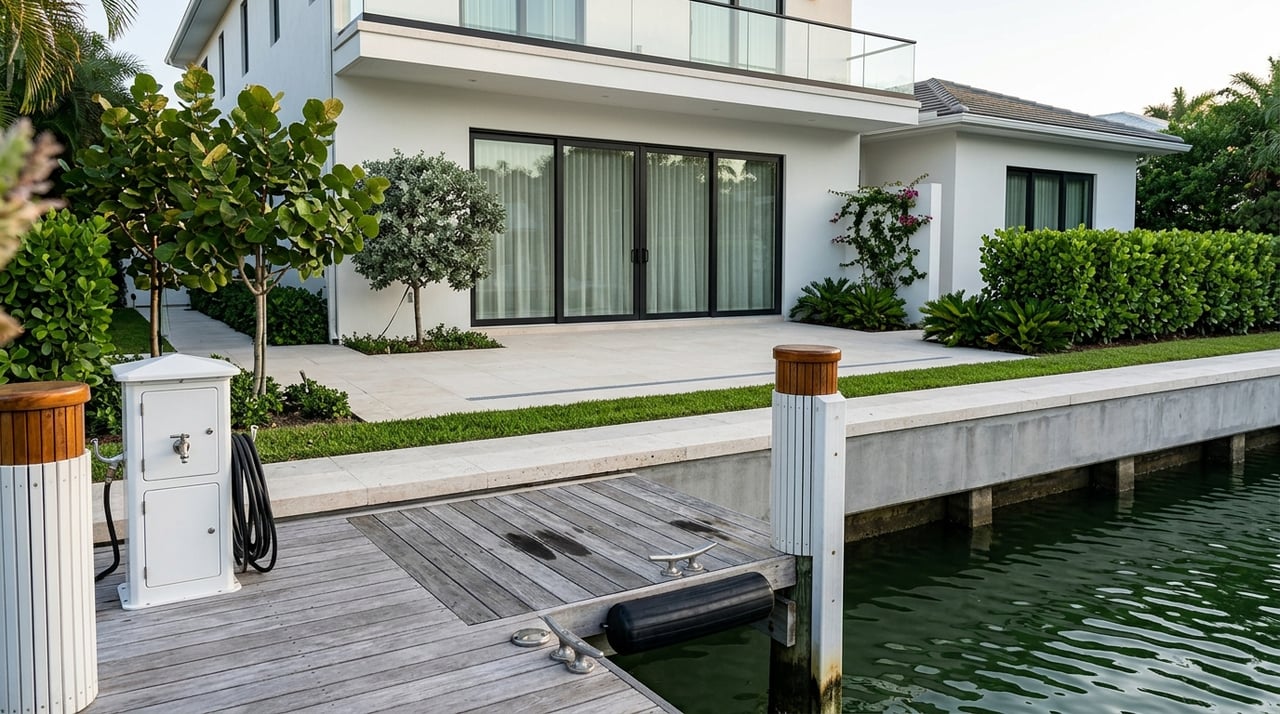
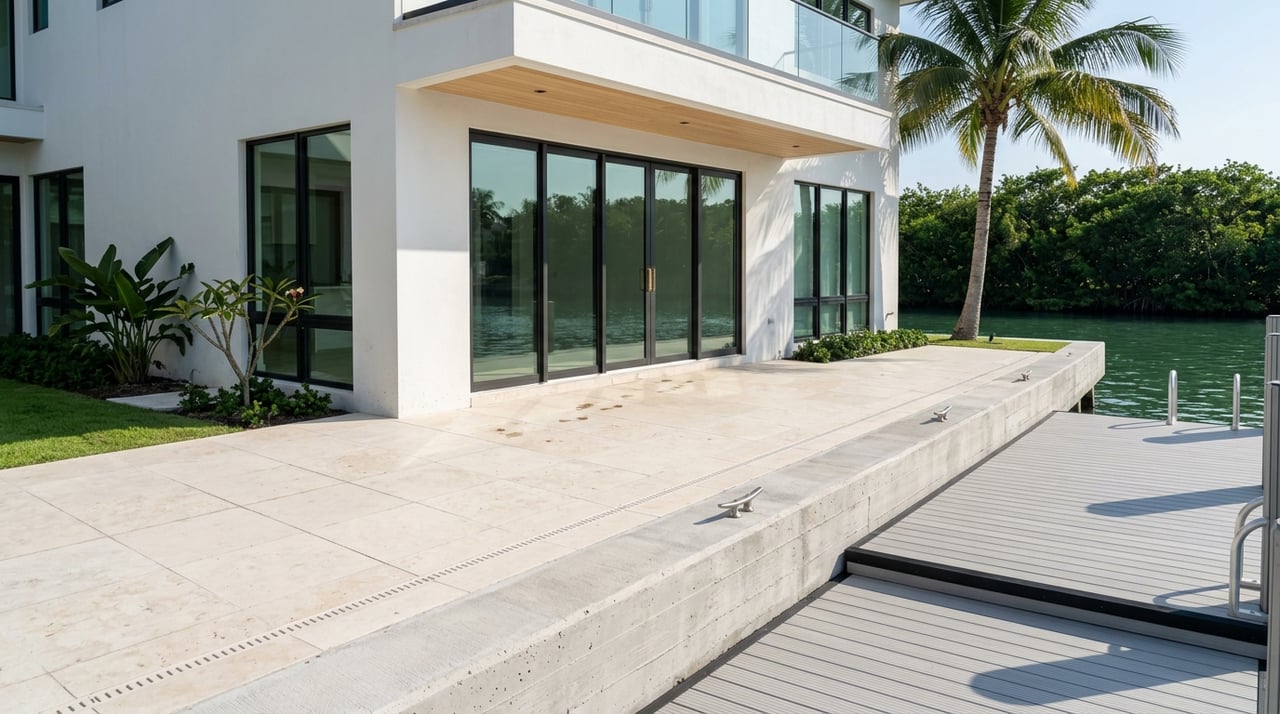
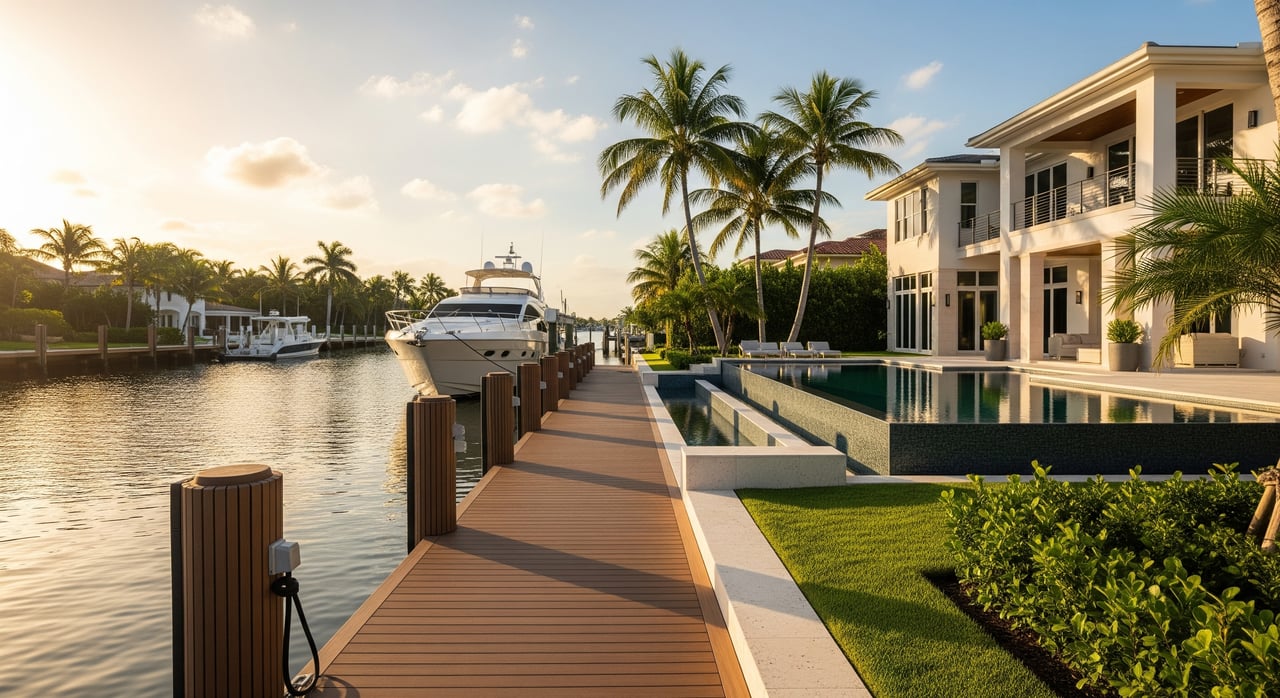
Canal-front single-family neighborhoods offer private docks and direct routes to Biscayne Bay. The Miami River adds an urban option with newer residential buildings in a working-waterway setting. Bridge heights and channel depths can limit certain vessels, so boat owners should verify clearances.
Top Miami waterfront neighborhoods
Fisher Island
- Housing: Ultra-luxury private-island condos and estates with club-style amenities.
- Lifestyle: Exclusive, private, and service-driven. Access is by private ferry or vehicle from Port of Miami with membership requirements.
- Boating: On-island private marina facilities suited to larger yachts in a private setting.
- Price tier: Ultra-luxury.
This is for you if privacy and club amenities matter more than public retail access.
South of Fifth and Miami Beach
- Housing: Oceanfront and bayfront high-rise condos, plus historic single-family pockets.
- Lifestyle: South of Fifth blends upscale dining and nightlife with luxury towers. Mid-Beach feels resort-like with newer towers. North Beach is more residential and quieter.
- Boating: Access to Miami Beach Marina and private condo slips. Government Cut offers quick ocean transit.
- Price tier: High to ultra-luxury in SoFi; mid to high in Mid- and North Beach depending on the building.
Ideal if you want a resort-city vibe and walkable dining with both beach and bay options.
Venetian Islands, Star, Palm, Hibiscus
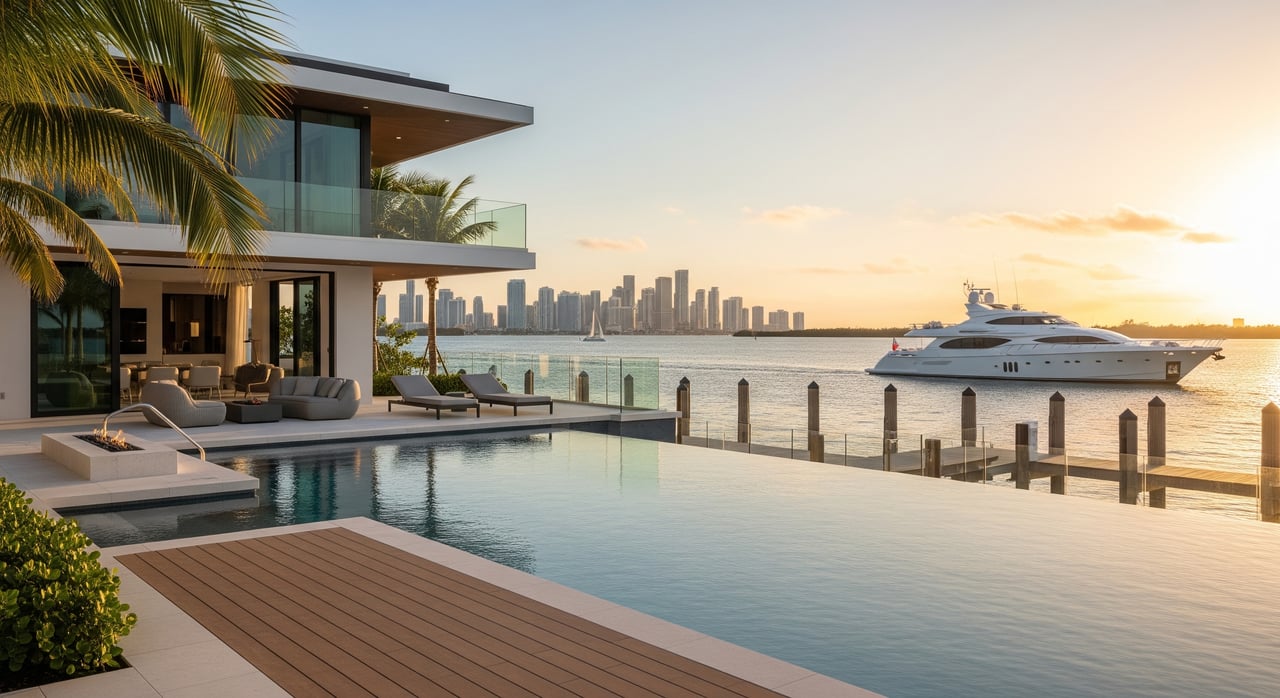
- Housing: Single-family mansions and gated estates, limited condos nearby.
- Lifestyle: Private island streets close to both Miami Beach and downtown. Low supply and high discretion attract executives and public figures.
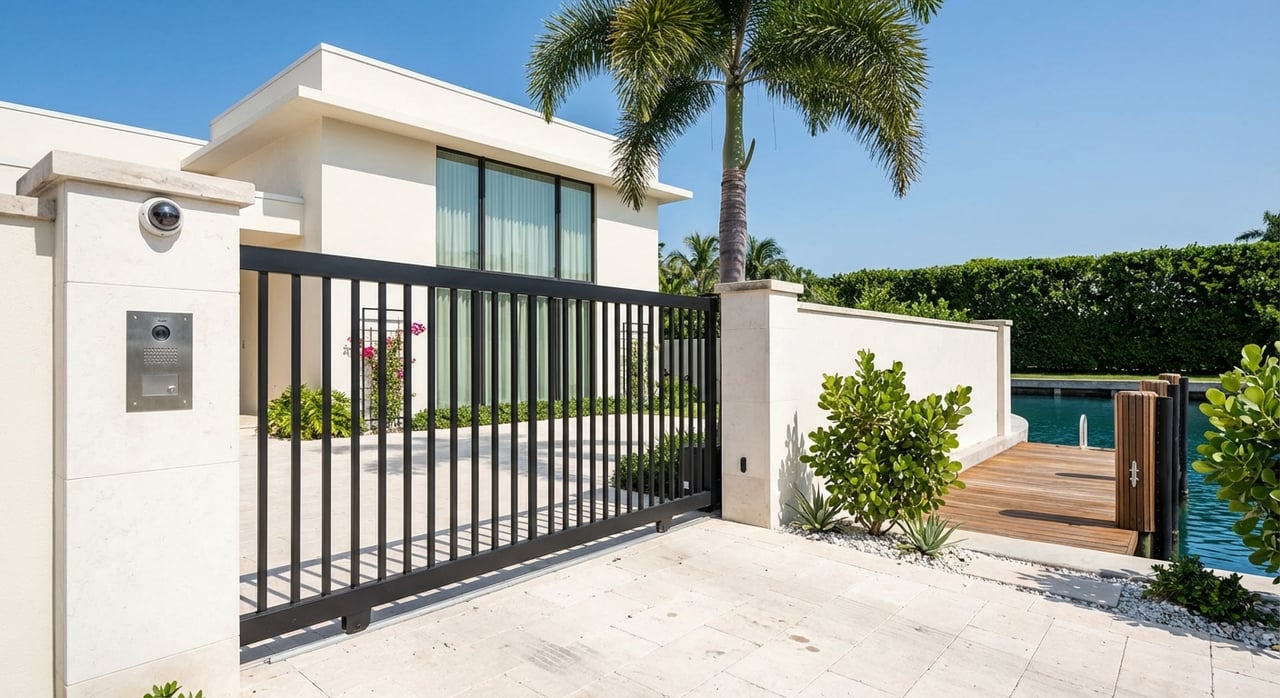
- Boating: Many homes have private docks with direct bay access and short routes to the ocean.
- Price tier: High to ultra-luxury.
Choose this if you want single-family bayfront living with central access.
Coral Gables waterfront and Gables Estates
- Housing: Canal-front estate homes and some luxury low-rise condos.
- Lifestyle: Tree-lined streets, Mediterranean architecture, and a calm, single-family environment.
- Boating: Canal systems with Biscayne Bay access. Private docks are common in waterfront pockets.
- Price tier: High to ultra-luxury for waterfront estates.
A fit if you value classic architecture, privacy, and a quieter setting near village retail and dining.
Coconut Grove
- Housing: Waterfront estates, garden condos, and boutique mid-rises.
- Lifestyle: Village feel with marinas, parks, sailing culture, and bayside dining.
- Boating: Dinner Key Marina and select private slips offer easy bay access.
- Price tier: High for waterfront.
Pick Coconut Grove for a laid-back, outdoor lifestyle close to downtown.
Key Biscayne
- Housing: Single-family homes and low to mid-rise condos, including beachfront buildings.
- Lifestyle: Island-resort feel with parks and a quieter residential pace.
- Boating: Crandon Park Marina and local facilities serve a strong boating community. Access via the Rickenbacker Causeway.
- Price tier: High to upper-high.
Works well if you want an island community with beaches and consistent boating culture.
Brickell and Brickell Key
- Housing: Luxury high-rise condos in an urban, mixed-use district. Brickell Key is a gated island of condo towers.
- Lifestyle: Walkable, urban luxury with top restaurants and quick access to downtown.
- Boating: Brickell Key and nearby facilities offer slips, with the Miami River and bay close by.
- Price tier: Upper-mid to high depending on the tower.
Consider this if you want full-service condo living near the financial district.
Edgewater and Downtown Biscayne Bay
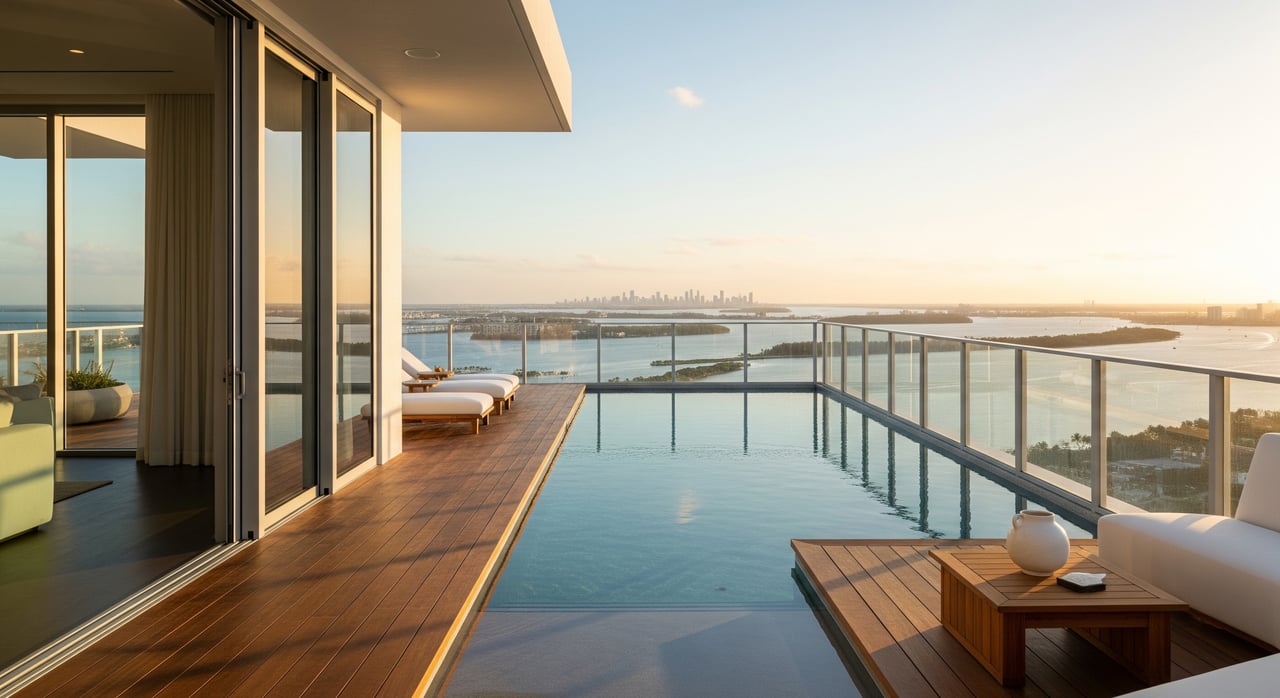
- Housing: Newer mid to high-rise condos with wide bay views.
- Lifestyle: Rapidly developing, near museums, Wynwood, and the Design District.
- Boating: Many buildings have access to slips or nearby marinas and quick bay routes.
- Price tier: Upper-mid to high.
Good for modern towers and cultural access with panoramic water views.
Sunny Isles, Bal Harbour, Surfside, Bay Harbor Islands
- Housing: Sunny Isles features new oceanfront towers. Bal Harbour offers boutique luxury condos near premier shopping. Surfside is a smaller beachfront community. Bay Harbor blends condos with single-family pockets.
- Lifestyle: From resort towers to boutique beachfront living and village-scale islands.
- Boating: Condo docks and small marinas are common, with larger facilities nearby. Ocean access through Haulover and Government Cut.
- Price tier: High, with Bal Harbour at the top.
Choose this corridor for beach-forward living with strong retail and dining options.
Aventura and Golden Beach
- Housing: Aventura mixes high-rise condos with single-family in gated enclaves. Golden Beach features low-density beachfront estates.
- Lifestyle: Aventura offers suburban convenience and major shopping. Golden Beach is quiet and low-density.
- Boating: Aventura-area marinas on the Intracoastal and nearby Haulover Marina. Many Golden Beach properties have docks.
- Price tier: Upper-mid to high, with Golden Beach higher for beachfront lots.
Ideal for those who want a calmer north-county setting with strong boating options.
Boating logistics to know
- Match your vessel to the waterway. Check slip dimensions, depth at mean low water, and any HOA or marina rules on vessel size.
- Confirm bridge clearances for your routes. Island causeways and the Rickenbacker have set heights that can limit sailboats and tall cruisers.
- Plan ocean access. Government Cut is the key channel between Biscayne Bay and the Atlantic. Cruise and port traffic can affect transit times.
- Clarify mooring rights. Owning waterfront land does not always mean a deeded or oversized slip. Verify riparian rights and any sovereign-submerged land issues.
- Ask about slip transfers and wait lists. Many condo marinas have limited slips with transfer fees or size caps.
A quick checklist before you bid: assigned dock or slip details, depth readings, bridge heights on your route, and written marina or HOA rules on ownership and use.
Practical costs and regulations
Flood and storm risk
Miami-Dade is low-lying and exposed to tidal flooding, storm surge, and long-term sea-level rise. Your flood zone classification can affect insurance and financing. Ask about elevation, past flood history, and any mitigation such as flood vents, raised mechanicals, and impact-rated openings.
Insurance and maintenance
Coastal homes often carry higher premiums for wind and flood coverage. For condos, confirm what the building’s master policy covers and review any special assessment history. Waterfront ownership can also bring seawall upkeep and elevated maintenance in ocean-exposed settings.
Short-term rental rules
Short-term rental rules are set by each municipality and by HOA documents. Miami Beach, Bal Harbour, Surfside, Key Biscayne, and the City of Miami each have specific permitting and zoning limits. If rental income matters, review municipal codes and building rules before you make an offer.
Taxes and ownership basics
Florida has no state personal income tax. The homestead exemption can reduce property taxes for a primary residence but does not apply to second homes or investments. Non-residents and foreign buyers can own in Florida, and many purchase with cash. Property taxes vary by municipality, so review the local assessments for any home you are considering.
HOA and amenity fees
Waterfront condos often carry higher HOA dues due to marina upkeep, seawalls, elevators, and hurricane hardening. Compare fees across buildings and see what is included, such as water, cable, insurance, parking, or marina maintenance.
Resilience and future-proofing
Look for community and city-level flood protection, such as raised streets, pumps, and improved seawalls. Newer buildings may include higher construction standards and flood-resistant design. Ask about planned resilience projects and how they could affect access or assessments.
How to narrow your short list
- Define your waterfront type: oceanfront beach living, bayfront boating, a quiet canal, or an island setting.
- Set your boating needs: vessel length, draft, and bridge clearance. Verify slip availability early.
- Choose your daily rhythm: urban-walkable tower, village-style neighborhood, or private island.
- Compare regulations: short-term rental rules, HOA policies, and marina bylaws.
- Stress-test costs: insurance quotes, HOA fees, seawall or dock maintenance, and potential assessments.
- Think long-term: flood zone, elevation, and local resilience planning.
Once you have a shortlist, tour by land and by water. The view from the bay, the time to the ocean, and the way a neighborhood feels at dusk will help you choose with confidence.
Work with a concierge advisor
A waterfront purchase in Miami blends lifestyle and logistics. You want clear advice on neighborhoods, marinas, flood risk, insurance, and building rules. With a hospitality-first, founder-led approach, you get personal attention and market guidance tailored to your goals.
If you are ready to compare options, align your boating needs with a property, and move forward with confidence, connect with Ginger Coutain for a private, strategy-led consultation.
FAQs
Best Miami areas for large yachts
- Deep-water marina access and short routes to the ocean matter most. Private-island options, select bayfront estates, and buildings with on-site marinas can suit larger vessels, subject to slip size and bridge limits.
Oceanfront vs bayfront costs and upkeep
- Oceanfront offers beach access and open views but often faces higher wind and wave exposure. Bayfront is calmer, typically better for boating, and can bring different insurance and maintenance profiles.
Primary home near downtown and water access
- Brickell, Brickell Key, Edgewater, and select Grove addresses offer urban convenience with bay views and nearby marinas, balancing commute needs with waterfront living.
Private-island access and membership considerations
- Some private islands use restricted access, ferry service, and club membership structures. Expect premium services, limited public access, and a defined rules framework.
How to confirm a dock or slip before buying
- Get written details on dimensions, depth at mean low water, and any deeded rights. Review HOA or marina documents for size caps, transfer rules, and wait lists.
Short-term rental rules by municipality
- Rules vary by city and by building. Confirm the municipal code and the HOA’s governing documents before relying on rental income in your plan.
Evaluating flood and sea-level rise risk
- Check the property’s flood zone, elevation, and any mitigation features. Ask for building or community resilience upgrades and review insurance options early.