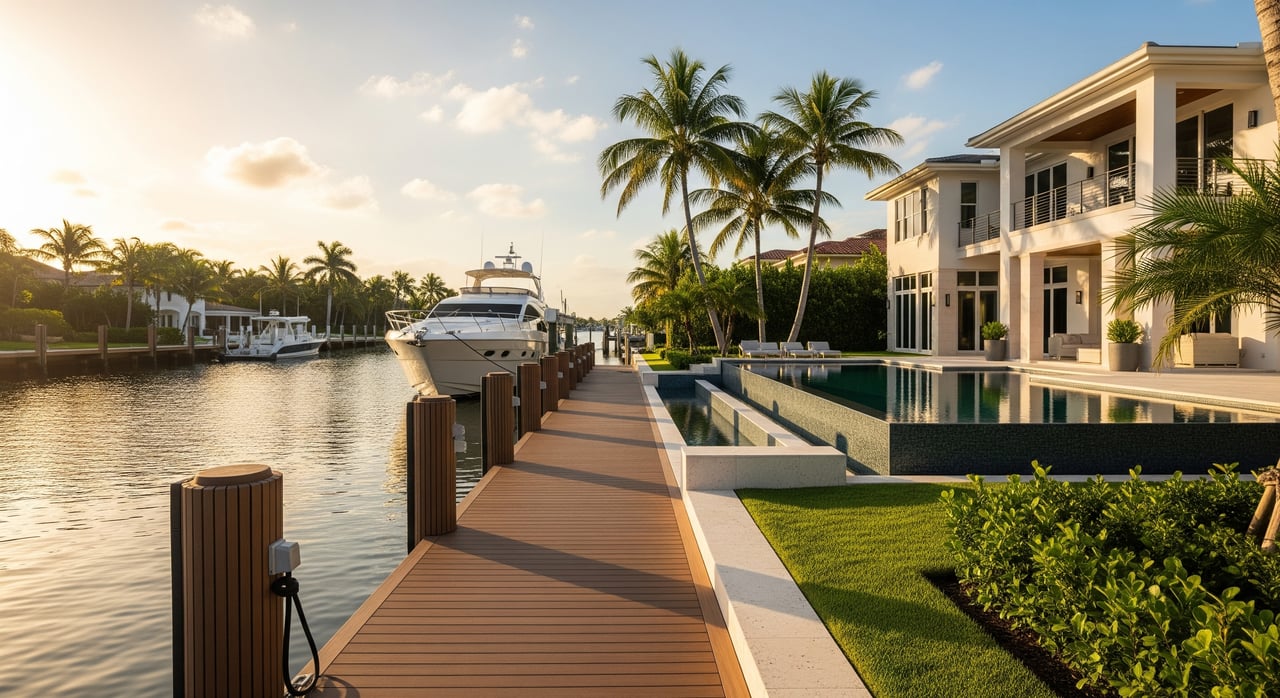
Pricing a waterfront home in Fort Lauderdale is not about square footage. It is about the water. If you want top dollar, you need a pricing plan that proves your dock works for the right boats and that your home stands up to buyer scrutiny. In this guide, you will learn a clear, step-by-step framework to price confidently using linear footage, depth, bridge clearance, exposure, and polished documentation. Let’s dive in.
What drives waterfront value in Fort Lauderdale
Fort Lauderdale sits on a network of the Atlantic Ocean, the Intracoastal Waterway, the New River, and a web of canals and basins. Each waterway type attracts different buyers and price bands. Oceanfront and prime Intracoastal frontage with direct ocean access sit at the top. Narrow or shallow canals with more restrictions trend lower.
Local permitting and codes also shape value. Seawall work, docks, dredging, and mangrove trimming involve federal, state, county, and city oversight. Flood zones, elevation, and insurance requirements matter as much as finishes. Buyers pay for certainty, access, and use.
Start with per-foot pricing, then adjust
A common starting point in Broward is the price per linear foot of waterfront. Build a baseline from sold comparables on the same waterbody within the last 12 to 24 months. Then apply targeted adjustments for depth, bridge clearance, exposure, dock and seawall condition, and the home’s renovation level.
Two properties with the same frontage can trade very differently. If one offers deep water and unrestricted ocean access while the other sits behind fixed low bridges, the first commands a premium.
Marine attributes that move price
Water depth at mean low water
Depth determines what you can berth at all tides. Yacht buyers prize reliable 8 to 12 feet at mean low water for larger vessels. If depth is close to a buyer’s draft, prepare recent soundings from a marine surveyor so there is no doubt.
Bridge clearance and ocean access
Clearance to the ocean affects time and utility. Fixed low bridges limit tall sailboats and flybridge yachts. Bascule bridges can add wait times. Document clearance at mean high and low water, and map the route to the inlet so buyers understand practical access.
Exposure and orientation
Oceanfront and Intracoastal frontage generally carry premiums. Wide basins and private harbors add maneuverability and privacy. Narrow or shallow canals can reduce appeal. Orientation can influence sun, wind, and boat traffic noise, which some buyers factor into offers.
Dock and seawall condition
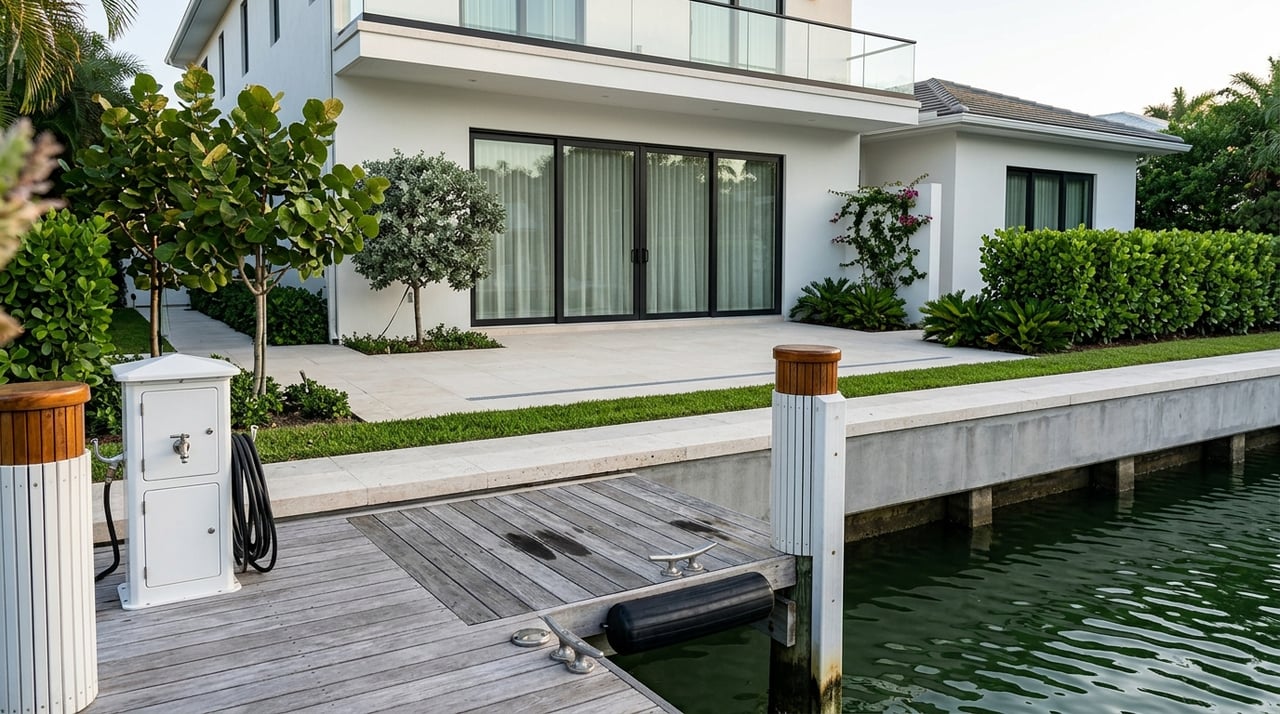
The quality of marine infrastructure matters. Buyers value usable dock length, power and water service, lifts and berths, and safe tie-up. Seawall age and integrity can be a make-or-break issue. If replacement is on the horizon, expect buyers to price in the cost.
Home and lot features still matter
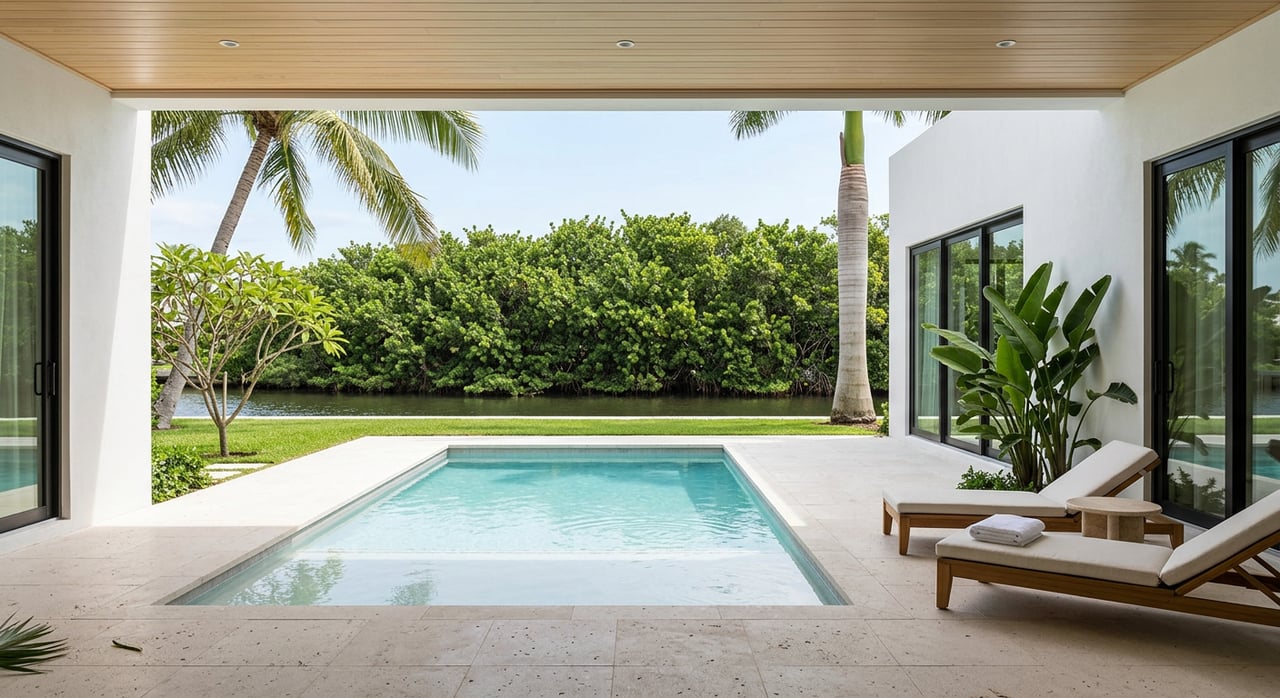
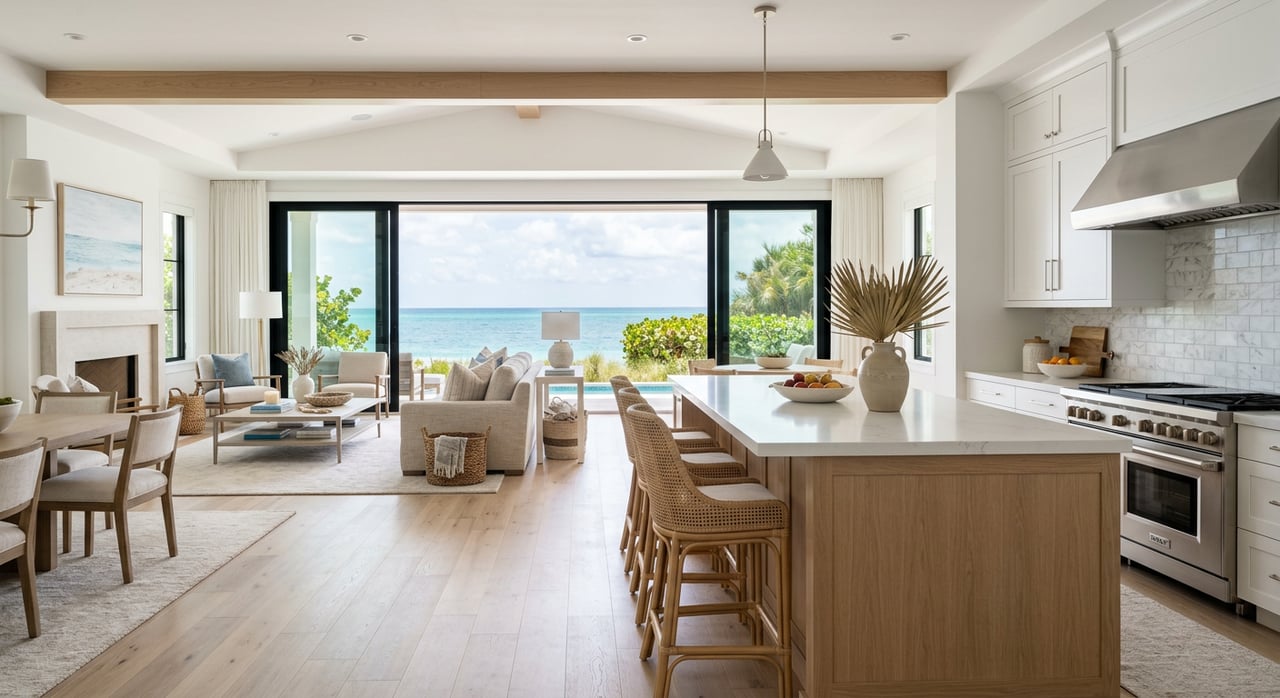
Marine attributes do heavy lifting, but the residence and lot complete the picture. Luxury finishes, a modern kitchen, elevator, pool, and garage capacity influence your buyer pool and price band. Lot shape and corner frontage can improve docking angles. Confirm any HOA rules, recorded covenants, or municipal restrictions that affect boat size or rental use.
Build your comp set the right way
- Pull sold comps on the same waterbody first. Tidal patterns, dredging history, and bridge networks differ by canal or basin.
- Favor the most recent 12 months. For trophy properties or thin segments, extend to 24 months and account for market movement.
- Separate boat factors from house factors. Adjust for linear footage, depth, bridge clearance, and dock or seawall condition before you adjust for interior finishes.
- Avoid mixing oceanfront with canal comps without large, explicit adjustments. Buyer pools and price structures are different.
Documents to gather before listing
Buyers of high-end waterfront homes in the Fort Lauderdale–Pompano Beach–Deerfield Beach area expect proof. Provide objective evidence up front to remove uncertainty and protect your price.
- Survey with recorded linear waterfront footage and lot lines
- Recent hydrographic sounding with depth at mean low water
- Route and bridge clearance notes from nautical charts and local authorities
- Seawall records: age, permits, engineering reports, and repairs
- Dock specs: length, lift ratings, electrical service, water lines, permits
- FEMA flood zone and elevation certificate, if available
- Current quotes for wind, flood, and homeowners insurance
- Any prior Army Corps, state, county, or city permits for seawall, dredging, or mangroves
- Contractor estimates for anticipated repairs or upgrades
- A comp packet summarizing sold waterfronts with notes on depth, access, and dock condition
Risk factors buyers will price in
- Sea level and flood exposure. Broward’s resilience planning is active, and buyers ask about elevation, drainage, and future costs.
- Insurance cost and availability. Premium changes can strain buyer budgets, especially in certain flood zones. Quotes help maintain confidence.
- Dredging uncertainty. If deeper draft is desired, permits are not guaranteed and may be costly. Uncertainty reduces willingness to pay.
- Seawall liability. A compromised or aging seawall is a direct hit to net proceeds. Inspection reports reduce discounting.
- Access disputes and riparian rights. Confirm there are no shared dock issues or recorded easements that limit use.
- Seasonal and tidal variations. If your dock is tide sensitive, provide a simple access chart to set expectations.
A step-by-step pricing method
Define your waterbody and product type. Ocean, Intracoastal, basin, or canal each have distinct baselines.
Build a like-for-like comp set. Use solds from the same waterway, similar linear footage, and comparable access within 12 to 24 months.
Convert comps to price per linear foot. If outliers exist, use a weighted average and document your logic.
Adjust for marine attributes. Move the baseline up or down for depth, bridge clearance, exposure, and dock or seawall condition.
Reconcile with a full property view. Balance the per-foot approach with a whole-home analysis to confirm your target range.
Create scenario bands. Present high, median, and conservative price bands based on buyer profiles, such as yacht-focused versus amenity-focused.
Listing strategy for Broward luxury sellers
- Prepare a yacht-buyer packet. Include usable dock length, depth at mean low water, lift specs, utilities, and clearance to the ocean.
- Prepare a luxury-home packet. Highlight interior upgrades, outdoor living, privacy, and neighborhood lifestyle.
- Time showings with the tide when depth is tight. Use local tide charts so buyers see best-case usability.
- Consider selective pre-listing improvements. Seawall tune-ups, dock power upgrades, or permitting clean-up can show strong ROI.
- If attributes are marginal, price intentionally. Aim for the most likely buyer segment rather than trying to be everything to everyone.
How Ginger LuxeReal positions your sale
You deserve a pricing strategy that stands up to the most discerning buyer in Fort Lauderdale and across Broward County. Our approach blends hospitality-level presentation with rigorous marine evidence. We compile depth soundings, seawall and dock reports, bridge access notes, and a clean permit history to justify your price. We also produce dual-track valuations that combine per-foot analysis with a whole-property view for complete confidence.
The result is simple. Buyers see less risk and more value. You see stronger offers and a smoother path to closing.
Ready to position your Fort Lauderdale waterfront home for maximum value? Schedule a Private Consultation with Ginger Coutain today.
FAQs
How do I price my Fort Lauderdale waterfront home?
- Start with a price-per-linear-foot baseline from sold comps on the same waterbody, then adjust for depth, bridge clearance, exposure, and marine infrastructure.
What depth do yacht buyers expect at my dock?
- Many large-vessel buyers look for reliable 8 to 12 feet at mean low water, supported by recent soundings from a qualified marine surveyor.
How do bridge clearances affect my value?
- Fixed low bridges and multiple openings reduce utility for taller boats, so homes with unrestricted or easier ocean access command premiums.
What paperwork should I have before listing?
- Provide a recent survey, depth soundings, seawall and dock reports, flood zone and elevation data, insurance quotes, and permit histories for marine work.
Can I use oceanfront comps to price a canal home?
- Not without major adjustments, because the buyer pool and price structure differ; prioritize comps on the same canal, basin, or Intracoastal segment.
How do insurance costs influence pricing in Broward?
- Higher or volatile wind and flood premiums can reduce buyer budgets; current quotes help maintain your price by reducing uncertainty.